
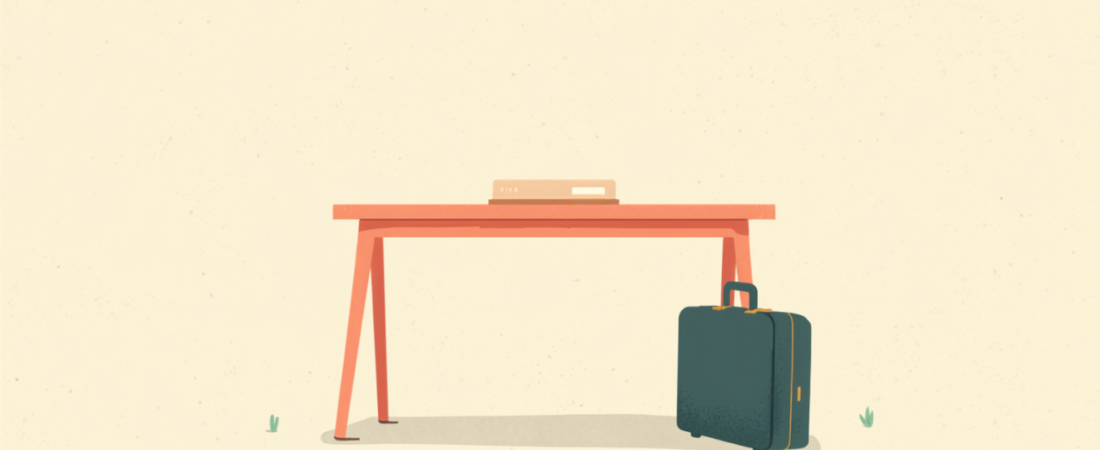
There’s a question that sounds simple and isn’t: what do you do all day now? For thirty, forty years, you had an answer ready before anyone finished asking. Now it sits in your mouth a beat too long.
A man I worked with — I’ll call him George — spent thirty-eight years as a plant manager. “People used to introduce me by what I ran,” he said. “Now they introduce me as ‘retired,’ like that’s a place instead of an absence.” He wasn’t depressed, not clinically. He was just quietly unmoored, the way a boat is unmoored — still floating, just no longer tied to anything.
If that sounds like where you are, I want to say this first: the discomfort you’re feeling isn’t a sign that you did retirement wrong. It’s a sign that your identity was, for a long time, load-bearing — propped up by a role that gave you structure, purpose, and a clear answer to “who are you.” Taking that role away doesn’t remove who you are underneath it. It just means you have to go looking for that person again, and that search takes longer than anyone warns you.
Here’s what I’ve come to understand, both from my practice and from Walter’s own retirement years before he passed: purpose rarely returns all at once, in one grand new mission. It comes back in smaller pieces — a skill someone asks you to teach, a project nobody else wants to start, a version of usefulness that doesn’t come with a title attached.
George eventually found his way back to himself by fixing small engines for neighbors, for free, in his garage. It wasn’t his old job. It wasn’t supposed to be. “Nobody calls me ‘plant manager’ anymore,” he told me, “but three people on my street call me when their mower won’t start. Turns out that’s enough.”
So if you’re sitting in that in-between space right now — busy, but not sure toward what — I wouldn’t rush to replace your old title with a new one. I’d just ask you to notice the small places where you’re still useful, still needed, still you. That’s where it starts growing back.