
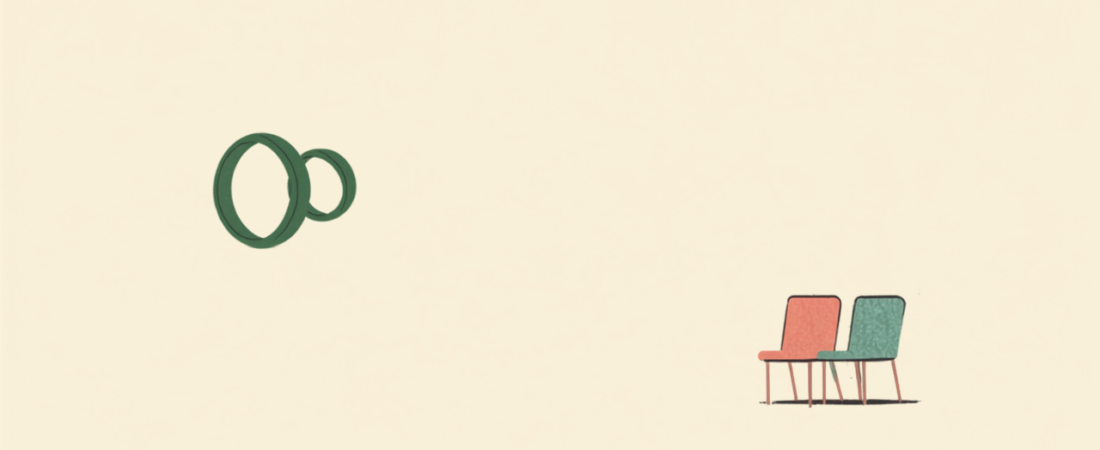
There’s a particular kind of quiet that follows a marriage ending after thirty years — not the quiet of an empty house, exactly, but the quiet of not knowing who you are without the person who used to finish your sentences.
A woman I worked with — I’ll call her Diane — divorced at sixty-two after thirty-four years of marriage. “Everyone assumed I’d feel free,” she told me. “Instead I felt like I’d lost my translator. He was the one who knew how I took my coffee, what I meant when I got quiet. Thirty-four years of shorthand, gone.”
If you’re in that particular unmooring, I want you to know something first: grieving a marriage you chose to leave, or one that ended despite your wanting to stay, is still grief. It doesn’t need anyone’s permission to be real, and it doesn’t cancel out just because the ending was, in some ways, a relief.
Here’s what I’ve come to understand, both from my practice and from watching friends walk this road: the hardest part of late-life divorce usually isn’t the paperwork. It’s rebuilding an entire social world that was built as a couple — the friends who don’t know whose side to take, the traditions that don’t make sense solo, the empty side of the table at other people’s dinners.
Diane told me the turning point wasn’t a new relationship or some grand reinvention. It was learning to go to the Sunday farmers market alone, on purpose, until it stopped feeling like something missing and started feeling like something hers. “I didn’t need someone there,” she said. “I needed to prove to myself I could still enjoy a Sunday.”
So if you’re standing at the start of a life you didn’t necessarily plan for, I wouldn’t rush you toward reinvention. I’d just ask you to find one small thing — a market, a walk, a chair by a window — that becomes yours again, on your own terms. The rest tends to follow, in its own time.