
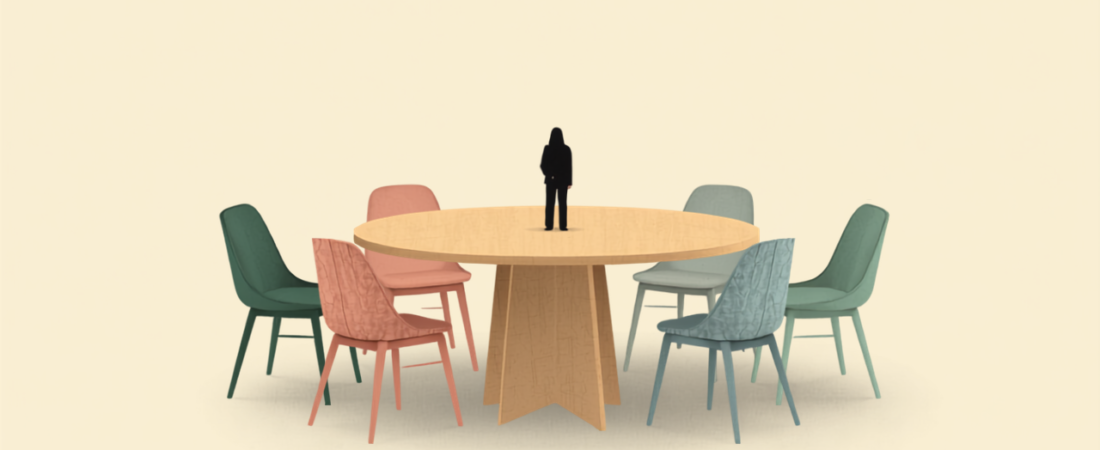
There’s a particular arithmetic that starts happening quietly in your sixties and seventies — you count the friends at your table this year against the ones who sat there five years ago, and the number keeps getting smaller in a way nobody warned you about.
A woman I worked with — I’ll call her Ruth — had lost three close friends within eighteen months. “Losing your parents, everyone expects that,” she told me. “Nobody tells you losing your friends might hurt just as much, or that you’re supposed to just keep going to bridge club with an empty chair.”
If you’re counting your own empty chairs lately, I want you to hear this first: friendship grief is real grief, even though our culture rarely treats it that way. We have rituals for losing a spouse, a parent, sometimes even a pet. We have almost none for losing the people who knew you longest, who remembered you before you were anyone’s parent or grandparent.
Here’s what I’ve come to understand, both from my practice and from watching my own circle shrink over the years: the instinct is often to protect yourself by pulling back from new friendships, as if fewer connections mean less to lose later. I understand that instinct completely. I’d also gently push back on it.
My friend Patricia, after losing two dear friends in a single year, made herself do something that felt almost reckless at seventy-four: she joined a new book club, full of strangers, fully aware some of them might not be there in ten years either. “I decided the alternative — closing the door because it might hurt again — was worse,” she told me. “I’d rather have five more years with someone than zero, because I was scared of the ending.”
So if your table has fewer chairs filled than it used to, I wouldn’t ask you to replace anyone. I’d just ask you not to let the fear of future loss talk you out of the friendships still available to you now.