
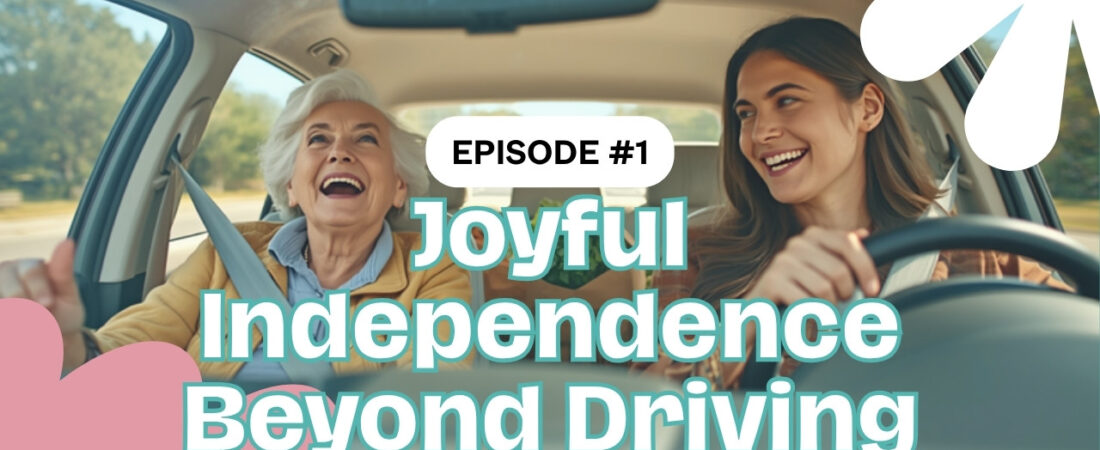
Stand in any medical plaza parking lot around ten on a weekday morning and you can watch it: the long, careful reverse out of the space. The pause at the lot’s exit that runs a beat past caution. The wide, slow turn taken like a question. Half the drivers you’re watching have already had the thought — quietly, privately, at some intersection last winter: how much longer should I be doing this?
Almost none of them have said it out loud. Because in this country, the car key isn’t a tool. It’s a citizenship document. Hand it over and — the fear goes — you stop being a person who goes and become a person who waits: for rides, for favors, for someone to have time. So the subject gets managed in silence, usually by shrinking — no more nights, no more highways, no more left turns against traffic, no more rain. The world pulls in, mile by mile, and everyone politely fails to mention it.
I’d like to replace that silent shrinking with an actual decision — one you make, with information, on your own schedule. Because that’s the version of this where you keep your dignity and your mobility. Here’s the framework.
Step one: get real data instead of a feeling. Fears thrive on vagueness, so trade it for facts. Occupational therapists offer something called a driving assessment — a couple of hours, on the road, with a professional whose entire specialty is older drivers. Not the DMV; nothing gets reported; you’re the client, not the suspect. They come back with specifics: your reaction time is fine, your night vision isn’t; your left-shoulder check has quietly disappeared. Two other pieces of cheap data: ask your doctor to review your medications for any that slow reactions (several common ones do, and combinations are sneakier than single drugs) — and ask an eye doctor specifically about night glare, because sometimes “I can’t drive anymore” turns out to mean cataracts, which are fixable, which means the whole crisis was actually an appointment.
Step two: read your own telltales honestly. The gauges that matter aren’t age — they’re events. Fresh, unexplained scrapes on the bumpers or the garage frame. Loved ones going quiet in the passenger seat, or the grandchildren suddenly never riding with you (children get scheduled out of cars before anyone says a word — it’s always the first tell). Getting honked at regularly, when you used to go months. A near-miss that replays at night. Missing a familiar exit and feeling flustered rather than amused. One of these is a Tuesday. A pattern of them is information.
Step three: run the actual numbers, because they will surprise you. Here’s the part almost nobody does, and it flips the whole story. That car in your driveway costs real money to sit there — insurance, registration, maintenance, gas, depreciation. For most older Americans driving well under ten thousand miles a year, the honest total runs several thousand dollars annually. Now price the alternative like an adult budget instead of a defeat: that same money buys an enormous number of taxi and ride-share trips — for many people, more rides than they were taking anyway. Communities on this budget also tend to discover what’s been built while nobody was looking: senior van services, volunteer driver programs through churches and agencies on aging, grocery delivery that’s become routine rather than exotic. The arithmetic doesn’t always say quit — sometimes it says keep the car, skip the nights. But run it, because “I can’t afford not to drive” is very often the one fear on this list that’s flatly false.
Step four: if the answer is “not yet,” retire like a professional. Nobody says a pilot who stops flying midnight cargo runs has “given up flying.” Restriction is a competence, not a concession: daylight only, familiar routes, no interstates, no bad weather, and take the CarFit check or an AARP refresher while you’re at it (the insurance discount is real). Put your own rules in writing, tell one person, and — this is the piece that preserves your authority — name your own tripwires in advance: “If I get two scrapes I can’t explain, or my daughter tells me she’s worried, I’ll rerun this whole review.” A decision with review dates is a decision you’re still in charge of.
Step five: if the answer is “it’s time,” time it like everything else you’ve ever timed well. The people this goes worst for are the ones who wait for the event — the crash, the license revocation, the family intervention in the kitchen with everyone’s arms folded. Then the keys leave on someone else’s terms, all at once, with paperwork. The people it goes best for treat it like leaving a career: on a chosen date, with a transition plan — apps loaded and tested while you still drive (practice rides are free of stakes; take three), the van service number on the fridge, standing arrangements made with specific names attached. And the car itself? Signed over to a grandchild who needs it, or sold with the proceeds earmarked for something visible — the trip, the porch furniture, the ride fund. A retirement, with a gold watch. Not a confiscation.
One more thing, because it’s the real one. The key was never the freedom. The freedom was the going — and the going is a logistics problem, which is a species of problem you’ve been solving your entire life. You ran households on less. The woman who figured out how to get three children to three schools with one car for fifteen years is not going to be defeated by the question of Tuesday’s grocery run.
She’s just working out the next route. She always does.