
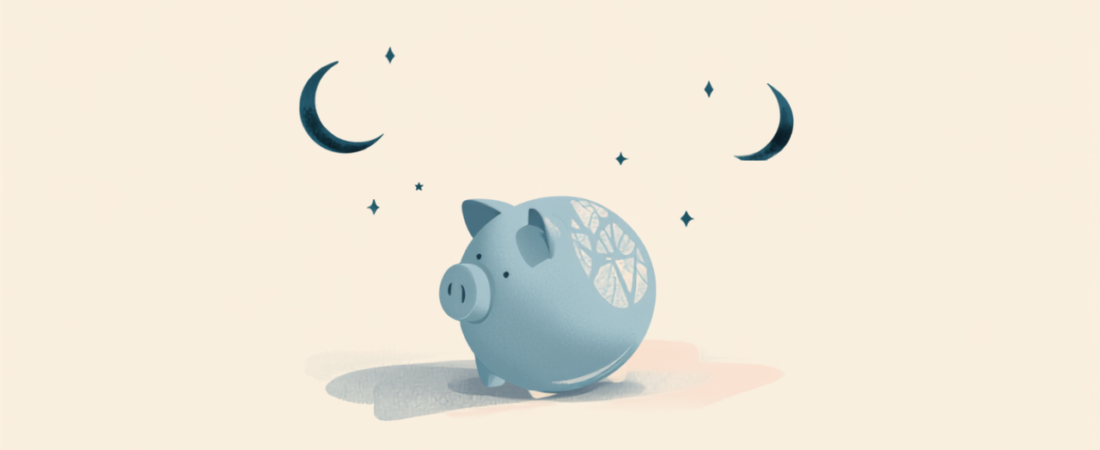
There’s a specific hour — usually somewhere past midnight — when the number in your retirement account starts doing math against you. Not the real math. The fear math. The one that assumes the worst version of every year you have left.
A woman I worked with — I’ll call her Nancy — had more saved than most people I’ve counseled. It didn’t matter. “I know the number is fine,” she told me. “But some nights I picture myself at ninety-one with nothing left, and I can’t argue my way out of the feeling, even when I know the facts don’t support it.”
If that’s a familiar hour for you, I want you to hear this first: what you’re feeling isn’t really about arithmetic. Most people who fear running out of money aren’t actually going to. Research on this is almost absurdly consistent — the large majority of retirees still have most of their original savings two decades in. The fear persists anyway, because watching a number you spent decades building go down, even when it’s supposed to, triggers something older and more primal than a spreadsheet can soothe.
Here’s what I’ve come to understand, both from the people I’ve counseled and my own accounting after Walter passed: the fear of scarcity often outlives the actual scarcity. It’s a habit built over a lifetime of “save, don’t spend,” and habits don’t know when their job is finished.
My friend Hal used to flinch every time he withdrew from his savings, even for something he could clearly afford. What helped wasn’t a bigger number — it was sitting down with someone who could show him, plainly, on paper, what he actually had and what he actually needed. Not to argue him out of the feeling, but to give the feeling something solid to stand next to.
So if that midnight math keeps finding you, I’d gently suggest this isn’t something to white-knuckle through alone. A clear-eyed look at your real numbers, with someone who isn’t afraid for you, tends to do more for that 2 a.m. feeling than any amount of worrying ever will.